

Homeowner Permits
When undertaking home or farm renovations or repairs involving electrical or plumbing work, obtaining a homeowner permit is essential to ensure compliance with safety standards.

Plumbing Codes
Ensure compliance with Saskatchewan’s plumbing codes and regulations. TSASK provides detailed guidance and resources for understanding provincial acts, ensuring your plumbing systems meet all legal and safety standards, protecting public health and property.
Resources
Frequently Asked Questions
- Plumbing
A permit is required for design, installation, construction, addition, renovation, alteration, repair, removal, or operation of a plumbing system. A permit is also required for the connection of plumbing systems to communal waterworks. These conditions also apply to rural property.
- Plumbing
In a setting under the authority of TSASK:
A permit can be issued to a Journeyperson plumber or a registered Contractor that employs a plumbing Journeyperson. Some jurisdictions may have additional requirements, such as a business licence.
A homeowner can apply for a permit subject to the following restrictions:
- The plumbing system is not to be connected to a communal waterworks or communal sewage works
- The single family dwelling unit is intended to be used exclusively for living quarters and will be occupied by the owner
- Plumbing
No, permits are dependant on your geographical area.
There are 5 Local Authorities in Saskatchewan:
- The city of Lloydminster
- The city of Regina
- The city of Saskatoon
- The Global Transportation Hub (GTH)
- The remainder of the province outside the limits of those listed above are under the authority of the Technical Safety Authority of Saskatchewan (TSASK)
The cities of Lloydminster, Regina, Saskatoon and the GTH operate under a separate agreement. If you live within one of those areas, please contact them for specific requirements.
- Plumbing
You can apply for a permit online.
- Plumbing
There are four different fee ranges based on the number of connected fixtures:
- 0 – 6 Fixtures: $130.00
- 7 – 16 Fixtures: $185.00
- 17 – 29 Fixtures: $350.00
- 30+ Fixtures: $575.00
- Plumbing
Future permit privileges may be denied, and the cause of interest (corrections required) may be registered in the Land Titles Registry against the title to the land.
You may also be denied connection to a communal waterworks system.
- Plumbing
Yes, you still require a permit for a rural property with a private water/sewage system.
You can apply for a permit online or call TSASK toll free at 1-866-530-8599.
In addition to the required permit from TSASK, you must apply for a permit at your local Saskatchewan Public Health office for the sewage disposal system as per the Private Sewage Works Regulations.
- Electrical
- Gas
- Plumbing
Legally you can request a copy of any permit for work performed on your property. This applies to all plumbing, gas, or electrical work. If a contractor is unwilling to supply a copy of a permit, please call TSASK toll free at 1-866-530-8599.
- Plumbing
These are regulations and codes must be followed:
- Plumbing
Yes, if the local authority determines that the applicant is unable to perform the installation or construction in a safe and acceptable way.
- Plumbing
Contact the inspector in your area using our Inspector Lookup tool. For scheduling we require a minimum of 48 hours (2 business days) notice.
More than one inspection may be required; a new home, for example, will require one inspection for the rough-in (underground, stacks and drains) and another after the fixtures are installed.
- Plumbing
Yes, this is dependent on the type of construction. Normally the initial inspection is to ensure code compliance of drains, venting and underground.
A second inspection is to ensure proper installation of fixtures including p-traps and water backflow prevention.
- Plumbing
A clearance letter is available on request. The owner or contractor can contact the inspector in your area.
- Plumbing
Contact the inspector in your area using our Inspector Lookup tool for a partial inspection. Note that there is an additional charge for this.
- Plumbing
Yes, a permit is required for the connection to a plumbing system. There is a base fee of $130 for this permit, as this is a certified home there is no additional charge for the fixtures.
- Plumbing
Yes, normally the inspection is performed at the construction yard and if approved a sticker will be applied. This sticker is verification that the installation meets minimum code requirements.
When placed on a permanent site a second permit is required. This second permit covers the connections of the home to the sewer and water system.
- Plumbing
You can simply email us at geis@tsask.ca or give us a call at 1-866-530-8599.
- Plumbing
Use our Inspector Lookup tool to find the Plumbing Inspector in your area.
- Plumbing
A permit is not required for:
- The repair or replacement of a valve, faucet, or fixture.
- The repair of a leak.
- Forcing out a stoppage if no change in the piping is required.
- The installation of a water treatment device, underground sprinklers, a domestic dishwashing machine or a laundry machine.
- Plumbing
The National Plumbing Code of Canada requires that all appliances, materials and fixtures must meet a minimum standard certified by the Canadian Standards Association (CSA) or another accredited testing agency.
- Plumbing
The area inspector will issue a correction order to the permit holder (homeowner, Plumbing Journeyperson, or Contractor).
In the case where a Journeyperson or Contractor submitted the permit, the homeowner will be copied on the correction notice. Should the Journeyperson or Contractor fail to make the necessary corrections, the responsibility for the corrections falls to the owner of the building.
- Plumbing
Communal sewage works refer to any works used in the collection, storage, transmission, treatment, or disposal of sewage for more than one property.
- Plumbing
A communal waterworks system includes piping and appurtenances used in the supply, collection, treatment, storage, or distribution of water for more than one property. Examples include a water meter from a municipality or a rural water line or drip system supplied by SaskWater or others.
- Plumbing
The purpose of a plumbing inspection is to examine ongoing or incomplete plumbing systems and work to ensure compliance with the Act or regulations under the Act.
- Plumbing
A plumbing system includes the whole or any part of a drainage system, a venting system, or a water system, but it does not include private sewage works.
- Plumbing
Private sewage works are defined by The Private Sewage Works Regulations.
- Plumbing
A cross connection is a point in a plumbing system where it is possible for non-potable water or other contaminants to enter the potable water supply. Examples include a garden hose connected to a pesticide or fertilizer spray bottle, a hose submerged in a paddling pool, laundry tub or pail, or where a potable water supply is connected to heating, cooling, processing, or manufacturing equipment.
- Plumbing
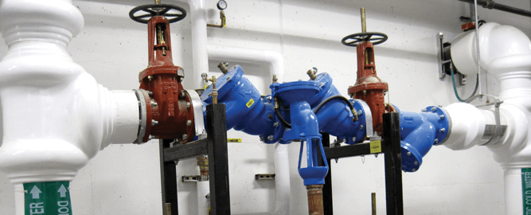
A device or assembly installed in a plumbing system that prevents a potential contaminant from entering a potable water supply. The device prevents the reversal of water flow, stopping contaminants from entering the water supply used for drinking, cooking, bathing, or other purposes.
- Plumbing
Other agencies ensure the water is safe to the point of delivery; cross connection control maintains the safety of potable water within buildings, protecting their occupants and the public.
- Plumbing
TSASK Plumbing Inspections enforces the National Plumbing Code of Canada and the requirements for the protection of potable water contained within. TSASK Plumbing inspectors ensure any cross-control device required by the National Plumbing Code has been installed correctly. TSASK Plumbing Inspectors do not test cross connection control devices.
- Plumbing
New plumbing systems must be installed in accordance with the National Plumbing Code and the Saskatchewan Plumbing Code Regulations. Permit holders are responsible for checking with their local bylaw offices and water utility regarding additional requirements for the installation of backflow prevention when performing plumbing works that may exceed plumbing code requirements.
- Plumbing
Yes, a permit is required. The installation of a backflow preventer is included in the base fee for a plumbing permit.
- Plumbing
Testing ensures proper operation and that the backflow preventer is functioning as intended.
- Plumbing
TSASK requires testing upon initial installation as per the National Plumbing Code. Other agencies or local bylaws will determine the frequency of additional testing.
- Plumbing
Specialized training is required to test backflow preventers. If your plumber does not have the proper training, a certified tester will need to be contacted to perform the test.
- Plumbing
Visit the following links to obtain the training to test backflow preventers in Saskatchewan:
- Plumbing
Email TSASK at geis@tsask.ca for identification tags.
- Plumbing
The device needs to be repaired or replaced and re-tested.
- Plumbing
You can find more information about cross-connection control from the links below:
- Saskatchewan Plumbing Code Regulations: TSASK Act & Regulations of Plumbing
- National Plumbing Code of Canada: Information Archived on the Web
- American Water Works Association, Western Canada Section: WCSAWWA
- Government of SK, Cross Connection Control and Backflow Prevention Program Guidelines: Publications Centre
- Plumbing
A plumbing permit is required for any alteration, extension, or addition to a plumbing system.
- Plumbing
A plumbing permit is not required:
- When a leak is repaired on either the plumbing system or water distribution system, without any alterations or changes to the orientation or design of the plumbing system.
- When a plumbing fixture is replaced, without any alterations to the plumbing system.
- When a washing machine or dishwasher is replaced, or installed, without any required alterations to the plumbing system.
- When an underground sprinkler system, or a water treatment system is installed, without any alterations to the plumbing system. Confirmation on whether your sprinkler system has a backflow preventer requires verification.
- When drain cleaning the plumbing system, if the existing cleanouts are used and the removal process does not necessitate any alterations to the plumbing system.
- Plumbing
A homeowner, performing a renovation to an existing plumbing system, of a single-family detached dwelling, that they own and occupy, can apply for a Homeowner Plumbing Permit.
- Plumbing
No. A Homeowner Plumbing Permit only applies to a renovation in an existing, owner occupied, residential single-family dwelling. A Homeowner Plumbing Permit does not apply to new construction or a new build.
- Plumbing
No. You must reside in the residential property, and it must be an exclusive single unit dwelling.
- Plumbing
The property’s intended use must be for the owner’s occupancy, and not to sell or rent out.
- Plumbing
No. The Homeowner Plumbing Permit is only valid for a personal residential property that is occupied by the owner, as a single-family dwelling.
- Plumbing
A minimum notice of 2 business days, to your area inspector, is required to book an inspection.
- Plumbing
No. Plumbing Permits are not transferrable.
- Plumbing
Yes. All plumbing must adhere to the code requirements of the currently adopted National Plumbing Code (NPC) of Canada and the Saskatchewan Plumbing Regulations.
Links are provided below for the current version of the National Plumbing Code of Canada and the Saskatchewan Plumbing Regulations
National Plumbing Code of Canada 2020, second printing
The Plumbing Code Regulations – Technical Safety Authority Saskatchewan (TSASK)
- Plumbing
- Complete the Homeowner Plumbing Permit application online (tsask.ca)
- Pay the required fee (specifics can be found on the permit application).
- Once we receive your completed application and fee, your permit is issued and valid to commence work.
- Plumbing
A Homeowner Plumbing Permit is valid for 2 years from the date of origin. The work must commence within 180 days of obtaining the permit.
- Plumbing
Your permit will list your area inspector. When your rough-in is complete, and your test is holding, you will then contact your area inspector to arrange for a scheduled inspection of your work.
- Plumbing
The owner or a competent person representing the owner must be present at the time of the inspection or testing.
- Plumbing
Typically, a rough-in and a final inspection are performed. With some projects, multiple inspections may be required. A re-inspection will be required to review corrections made to a plumbing system that were identified during an initial inspection.
- Plumbing
- All waterlines must be installed and connected to the existing water distribution system.
- Valves for the showers/bathtubs must be installed.
- All plumbing drainage and venting must be installed, and supported, as required.
- The plumbing system must be tested as outlined in the National Plumbing Code (NPC). This includes applying an air pressure test or water pressure test to the drainage and venting systems (as per the NPC requirements). The system must be under test during inspection.
- Necessary striker plate/protection must be applied to all drains, vents, and waterlines where protection against physical damage is required. Any location that a screw, nail, etc. can compromise the piping will require this protection.
- Groundwork plumbing must remain exposed until inspected.
- Plumbing
- All plumbing fixtures and associated equipment must be installed and ready for use.
- All fixtures must be certified for use in Canada.
- Any piping, designed for future fixtures, must be sealed with an approved cap or plug, as required.
- Water temperature, at bathtub and shower locations, must not exceed 49° Celsius.
- Cross connection control requirements are met. (ex: hose bibb vacuum breakers are installed)
- Plumbing
Any actual or potential connection between a potable water (drinking water) supply and any pipe, vessel, tank, plumbing fixture, equipment, or device through which it is possible for used, polluted or contaminated water or any other substance to enter the potable water system.
- Plumbing
There are three separate outcomes, once an inspection has been completed.
- Acceptable Inspection – work and code compliance is acceptable, continue with the installation.
- Acceptable (under conditions) – may continue with the installation; certain conditions are required to be met from the homeowner.
- Corrections are required – re-inspection is required. Work may not commence further.
- Plumbing
- Testing requirements of the plumbing system are not met
- Improper configuration and layout of the plumbing system
- Improper drain slope
- Cleanouts, or expansion joints are not installed as required
- Backwater valves not installed as required
- Wrong fittings used in horizontal drainage (tee fitting or 90-degree elbows used when Y or 2 – 45-degree elbows are required)
- Improper support of piping, or groundwork bedding of the pipe
- Trap arms exceeding maximum fall or distance to its vent(s)
- Improper pipe sizing
- Plumbing
- The owner must reside at the property.
- The property is your principle residence.
- The property is a single-family dwelling.
- There are no rental units at this property.
- The work is to be performed by the owner.
- If a contractor is enlisted, the contractor must apply for the plumbing permit. A plumbing permit cannot be transferred.
- The work must be completed to meet the requirements of the NPC and Saskatchewan Plumbing Regulations.
- It is your responsibility to phone your local inspector to arrange for an inspection(s). A minimum notice of 2 business days is required.
Regulated Technologies
Ensure the safety, compliance, and efficiency of your systems with TSASK’s expert inspection and certification services for all regulated technologies under our jurisdiction.
Gas
Permits, Inspections & LicensingEnsure the safety and efficiency of your gas systems by verifying all maintenance work and installations comply with provincial safety standards.
Electrical
Permits, Inspections & LicensingWe provide permits for new electrical installations, upgrades, and routine maintenance, ensuring adherence to Saskatchewan’s electrical codes and preventing potential hazards.
Plumbing
Permits & InspectionsWe provide permits for residential and commercial plumbing systems, following health and safety standards and confirming proper installation, maintenance, and operation.
Boilers & Pressure Vessels
Permits & Inspections, Licensings, Examinations, and CertificationsMaintain the safety and operational integrity of your boilers and pressure vessels, aligning with provincial standards and prolonging the life of your equipment.
Elevating Devices
Permits & Inspections, Licensings, Examinations, and CertificationsGuarantee the reliability of your elevators, escalators, and other lifting devices, ensuring they meet all safety regulations and standards for smooth, secure operation.
Amusement Rides & Devices
Permits, Inspections & LicensingMaximize safety and enjoyment on your amusement rides and devices. From roller coasters to inflatables, we help guarantee every ride operates safely and reliably.


